
Our Ingredients & Process
How We Deliver 46 g Protein per 100 g in an Everyday Staple
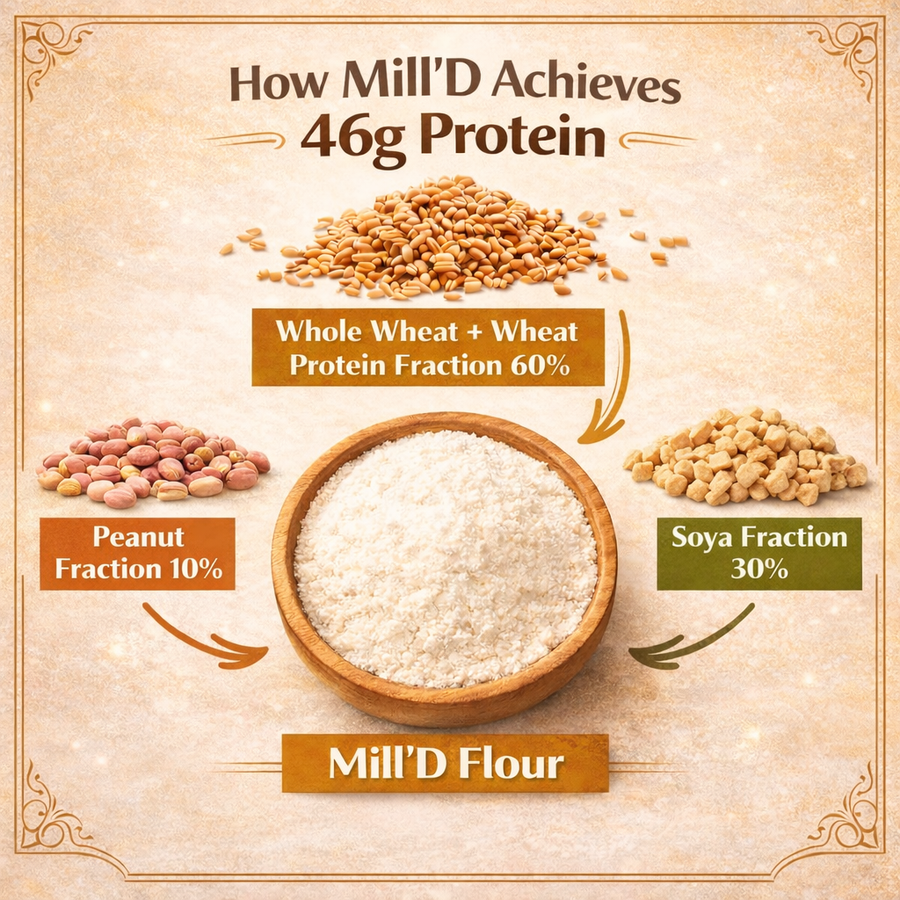
Ingredient Composition: Whole Wheat + Wheat Protein Fraction 60%, Soya Fraction 30%, Peanut Fraction 10%
MILLD PROTEIN ATTA IS NOT MADE BY SIMPLY MIXING REGULAR FLOURS.
It is produced using a hybrid protein enrichment and structuring platform that combines advanced dry fractionation, controlled wet protein extraction, and functional protein reconstitution.
This approach allows us to deliver 46 g of protein per 100 g while preserving dough elasticity, handling, and traditional roti taste.
1. Process Overview
Milld’s protein system integrates three scientifically established techniques:
-
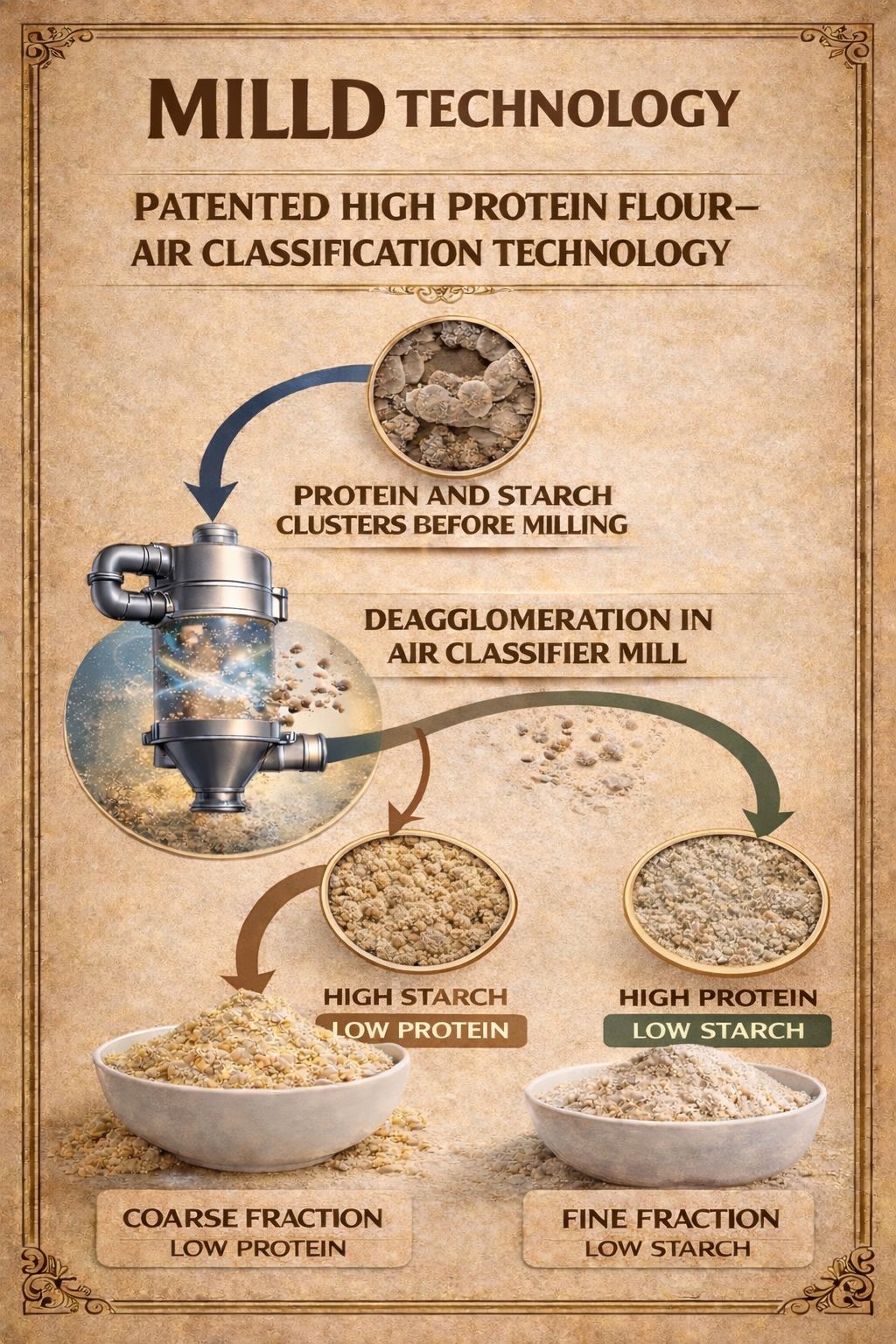
Dry Fractionation / Protein Shifting
(Ultrafine milling + air classification) -
Functional Reconstitution
(Protein network formation for dough strength and roti texture)
This controlled combination creates a high-protein, functional composite flour, not a brittle or chalky protein blend.
2. Ingredient 1: Protein-Structured Wheat Fraction (60%)
Purpose:
Transform wheat into a high-protein functional base, rather than conventional atta.
A. Pre-processing & Fractionation
- Wheat is cleaned, tempered, and conditioned to stabilize moisture.
- Milling and controlled separation isolate protein-bearing wheat fractions from starch-heavy streams.
B. “Wave Process” (pH-Shift Protein Structuring)
This is a globally accepted protein science principle adapted for cereal proteins.
- Wheat protein fractions are dispersed in an aqueous phase.
- Alkaline pH adjustment increases protein solubility, releasing proteins from the starch matrix.
- Insoluble starch and fibre are separated through filtration or centrifugation.
- pH is returned toward the isoelectric point, causing proteins to precipitate.
- Re-neutralization allows proteins to reorganize into a functional elastic network.
- Low-temperature drying preserves functionality.
Result:
A protein-enriched wheat fraction with significantly higher protein than normal wheat flour, while retaining dough elasticity and kneading stability.
3. Ingredient 2: Soy Protein Fraction (30%)
Purpose:
Deliver clean, high-quality plant protein with reduced fat and controlled flavour.
A. Stabilisation
- Soybeans are cleaned, dehulled, and mechanically processed.
- Oil removal increases protein concentration and shelf stability.
- Controlled heat or enzyme treatment reduces undesirable compounds.
B. Protein Enrichment
Two enrichment pathways may be used depending on purity targets:
Dry Protein Shifting
- Ultrafine grinding creates a particle size distribution.
- Air classification separates:
- Fine, protein-rich particles (<20 µm)
- Coarser carbohydrate-rich fractions
Result:
A defatted, high-protein soy fraction suitable for daily staple consumption.
4. Ingredient 3: Peanut Protein Fraction (10%)
Purpose:
Enhance protein density, amino acid diversity, and taste—while controlling fat.
Protein Enrichment
- Ultrafine milling and air classification separate protein-rich fines.
Result:
A protein-enriched peanut fraction with stable performance in composite flour systems.
5. Why This Technology Works
-
Dry fractionation uses particle physics:
- Starch remains coarser
- Proteins concentrate in fine particles (<20 µm)
- No water or chemicals required
-
Composite protein design (wheat + soy + peanut) delivers:
- Complete amino acid profile
- Stable dough handling
- Familiar roti taste and texture
6. Compliance & Transparency Statement
Recommended Website Line:
“Protein values are calculated based on ingredient specifications and validated through batch-wise NABL-accredited laboratory testing. Natural agricultural variability may cause minor deviations.”
Ingredient Declaration
Whole Wheat & Wheat Protein Fraction (60%), Defatted Soy Fraction (30%), Defatted Peanut Fraction (10%)
Allergen Declaration
Contains:
- Wheat (Gluten)
- Soy
- Peanuts
This product is manufactured using wheat protein fractions, defatted soy fractions, and defatted peanut fractions.
Important Information for Consumers
- Not suitable for individuals with wheat/gluten allergy, soy allergy, or peanut allergy.
- Contains naturally occurring gluten from wheat.
- Manufactured in a facility that handles cereals containing gluten, soy, peanuts, and other nuts.
Advisory Statement
People with food allergies should read ingredient information carefully and consult a healthcare professional before consumption.
Transparency Promise
Milld believes in full transparency.
👉 Visit: www.MillD.com